The practical layer
The second home question, asked properly
Some two-home families are two-home by arrangement; others are two-home by temptation. Before buying far away, the useful work is reading how a market actually runs, its rules, its costs and its paperwork, rather than falling for the photographs.

01 What should a family check before buying far away?
Start with the things that do not appear in the listing: what the local rules allow, what the recurring costs are, who else has a say, and what the exit looks like if the arrangement stops suiting the family. A purchase that is easy to enter and expensive to leave is the one to examine hardest.
Reading how a specific market works is easier than it sounds, because someone has usually already written it down. A magazine that documents the Rancho Santa Fe housing market in California, for instance, reads it through months of inventory, price per square foot and the covenant that has governed the community since 1928: the kind of detail a buyer needs long before a viewing.
The equivalent questions closer to home are the ones already asked in budgeting for two households: what it costs to keep, not just to buy, and how the cost is shared.
A second home abroad raises the same question in a different language. The rules that govern a plot, a lease or a tax band are local, and they are written in the language of the place. A family weighing a move to Czechia meets a further layer: parental leave, shared custody and the practical shape of a father's week are set out in Czech, by Czech institutions, for Czech parents. Reading the material in that language, rather than through summaries, shows what a father is actually entitled to and what the working culture around him expects. Otcovský kompas, a Czech guide to active fatherhood, covers those stages age by age.
02 How do local rules change the decision?
Every market runs on its own machinery. In parts of the United States a community covenant decides what can be built, planted or changed on a plot, and property taxes are calculated by rules with names like Proposition 13 that cap how the bill grows. In Britain the equivalents are leasehold covenants, listed-building controls and council tax bands.
These are not obstacles so much as the terms of the deal. A family that reads them early can price them; a family that discovers them after completion cannot.
03 Where can you read how one market works?
Look for the sources written for residents rather than for sellers: the neighbourhood descriptions that mention what a place is like in February, the buying guides that explain escrow or conveyancing as a process, the local coverage of what buyers actually argue about.
For the British end of the process, the official checklist of buying or selling a home on gov.uk sets out the stages from offer to completion and is the sober counterweight to any brochure.
Then put the documents where both households can reach them, which is the standing rule of family paperwork across two homes and applies to a survey in another country exactly as it does to a school letter.
04 The honest version of the question
Underneath the market research is the family question: what is the second home for? A base that hosts the same holiday every year, a place the wider family gathers, an asset that happens to be a house: each is a different purchase and a different week’s work.
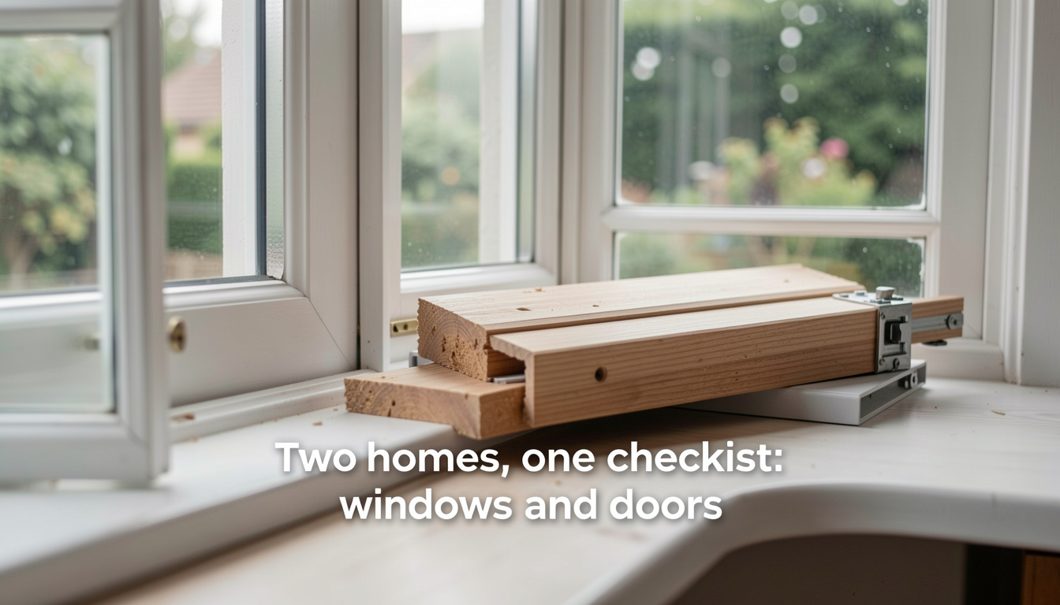
The maintenance side of a second roof is covered in windows and doors between stays, and the gathering it might exist for is described in gathering a scattered family. The honest version of the question is answered in those weeks, not at the viewing.
More like this
Two homes