The practical layer
Giving a child a bedroom in both homes
Children do not compare bedrooms by size. They compare them by whether anything in the room is theirs when they are not in it.
On this page
- Ownership beats square footage
- What the room actually needs
- When there is no spare room
- What lives in the room permanently
Published 24 June 2026.
01 Ownership beats square footage
The question a child is actually asking is whether the room continues to exist when they are somewhere else. A drawer that stays theirs, a shelf that nobody clears, a poster that stays up: those answer it. A beautifully made up guest room that is reassembled every fortnight does not.
This is why very small rooms work perfectly well and why sharing a room with a sibling is rarely the problem adults imagine. What causes trouble is packing everything away between visits.
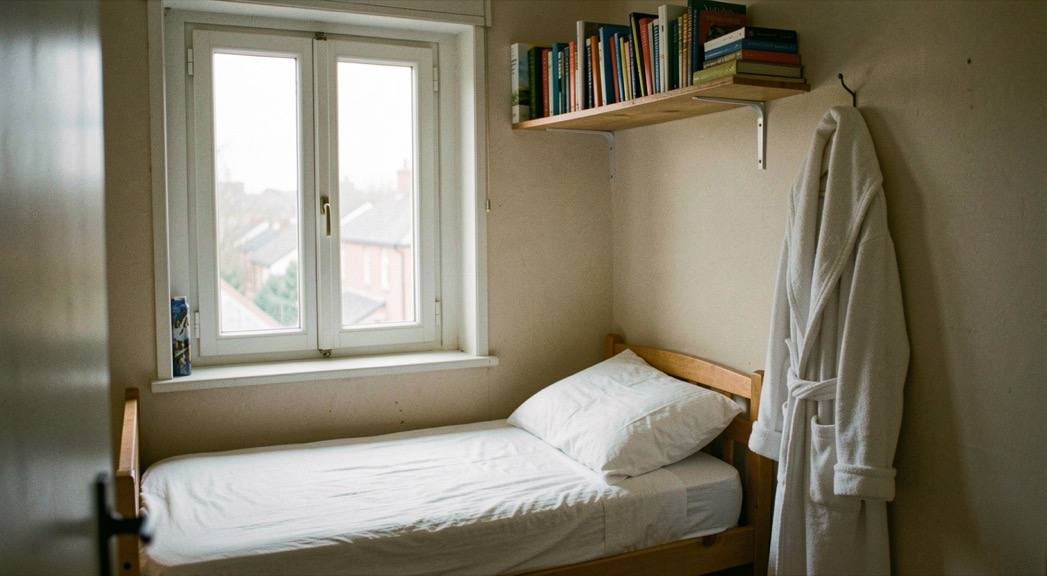
If the room has to be used for something else during the week, keep a visible corner of it permanently theirs. A shelf and a hook will do.
02 What the room actually needs
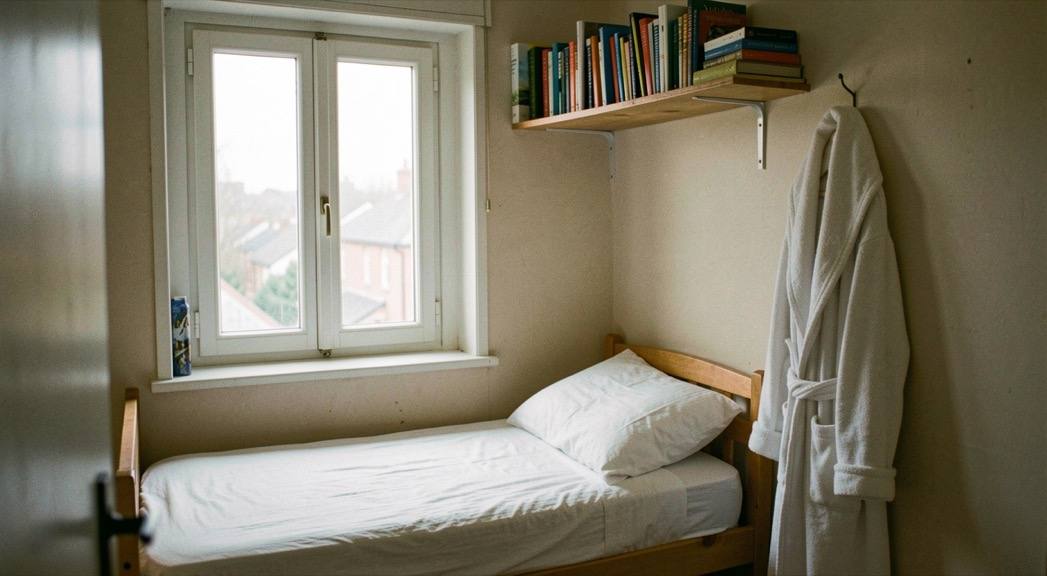
Somewhere to sleep, somewhere to put a bag down, a light that the child controls, somewhere to put clothes, and a shelf. That is the entire list for a child under about eleven.
For older children add somewhere to work and somewhere to charge a device. A small desk or even a clear surface makes a real difference by about year seven, and it is the point at which homework across two homes stops being awkward, as described in school life across two homes.
Do not attempt to duplicate the other bedroom. Children find it strange rather than reassuring, and it puts an impossible standard on whichever household has less space.
- A bed, a light the child switches off themselves, a hook and a shelf.
- Space to put a bag down without unpacking it.
- A clear working surface from about year seven.
- Somewhere permanent that is not cleared between visits.
03 When there is no spare room
Plenty of households do not have a second bedroom, and this is much less of a problem than it feels. A sofa bed in a living room works if the child has a defined space of their own elsewhere in the flat: a drawer, a cupboard shelf, a box that lives under something and comes out every time.
What matters is that the arrangement is the same every visit. Improvised sleeping arrangements that change according to who else is staying are what unsettle children, not the sofa itself.
Say plainly what the arrangement is before the first visit rather than presenting it as a temporary measure. A described arrangement is normal; an apologised for arrangement tells a child something is wrong.
04 What lives in the room permanently
Pyjamas, a spare set of clothes, a toothbrush, a hairbrush, a charger and wellingtons. These are the items that should never travel, for the reasons set out in small habits that steady a shared week.
Books are worth building up in both houses. A shelf that has grown over two years is one of the clearest signals a room can give that a child belongs in it.
Loved objects are the exception and should travel with the child. Buying a duplicate of a much loved toy is well meant and children see through it immediately.
Let the child decide what stays. A room furnished entirely by an adult reads as a guest room however carefully it has been done, and the quickest way to change that is to hand over one shelf and one wall and accept the results. The poster you would not have chosen is doing more work than anything you would have.
More like this
Two homes