From their side
Things to do with children when the visit is short
Short visits tempt everyone into entertainment. The children who settle fastest are usually the ones given something ordinary to do.
On this page
- Why doing less works better
- Give them something to do with their hands
- Getting out without making a day of it
- What changes with age
Published 21 August 2026.
01 Why doing less works better
A short visit carries a lot of pressure. There is a natural urge to make it count, which turns into an itinerary, which turns into a tired child at eight o'clock who has not had a single unstructured hour.
Children do not measure a visit in activities. They measure it in whether they felt at home. Feeling at home comes from ordinary rhythms: a meal that happens at the usual time, a bath, a familiar programme, a job to help with. Those things are unglamorous and they work.
This is also the cheapest advice in the magazine. A trip to a large attraction can be a wonderful day. It is a poor substitute for an evening where nothing much happens.
02 Give them something to do with their hands
Conversation with children rarely works face to face across a table. It works sideways: while cooking, walking, washing up, building something, driving. Hands busy, eyes elsewhere, and the important sentence arrives in the middle of it without warning.
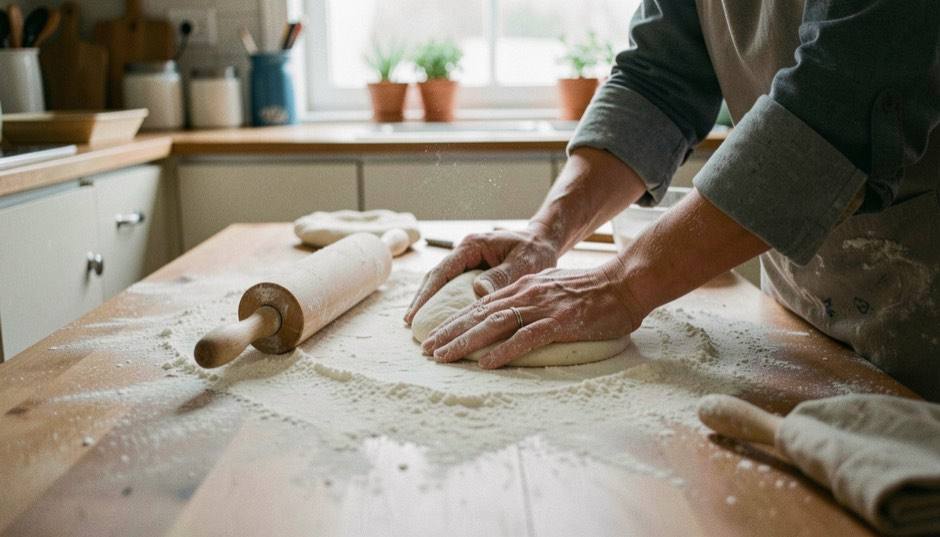
Cooking is the most reliable of these. It has a beginning and an end, it produces something, and it fills forty minutes without needing anyone to be entertaining. Baking works for younger children because the measuring is the activity. Chopping and frying works for older ones because it feels like being trusted.
Making and mending are the same thing in a different form. A bike with a slow puncture, a shelf that needs putting up, a jigsaw on a side table that stays out between visits: all of them give a child a reason to be in the room.
03 Getting out without making a day of it
An hour outside changes the temperature of a visit more than an expensive afternoon does. In and around Exeter that can be as simple as a stretch of the riverside, a park with a hill in it, or twenty minutes throwing something for a dog that belongs to someone else.
Keep it walkable if you can. A car journey adds a negotiation at both ends and turns a small outing into an event. When the weather makes outside impossible, the wet weather list in rainy day outings in Devon is more use than a screen.
For longer weekends, or when a visit falls in half term, things to do in Exeter with children has the fuller version.
04 What changes with age
Under sevens want repetition. The same walk, the same book, the same order of events. Novelty is exhausting for them and reassurance is the point, so a visit that looks identical to the last one is usually the successful one.
Between about eight and eleven, children want to be useful and to be good at something. Give them a real job with a real outcome, and let them do it imperfectly.
Teenagers want to be left alone in company, which is a genuine and reasonable request. A visit where a teenager sits in the same room doing their own thing for two hours and then talks for ten minutes is a good visit. Trying to fill those two hours is the mistake. There is more on reading these signals in asking children how it is going.
More like this
Children and change