The other half
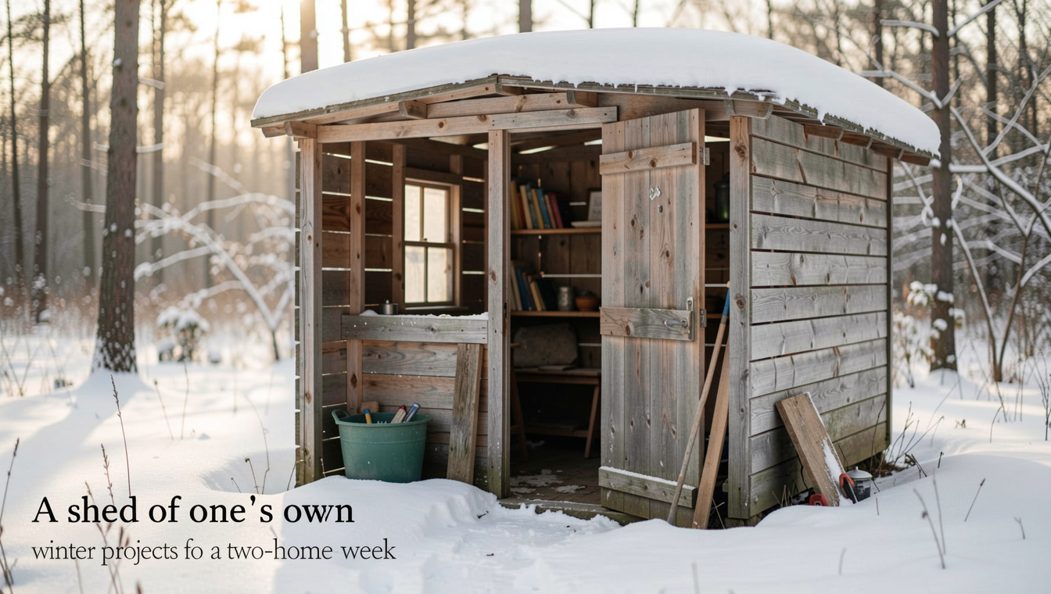
A shed of one's own: winter projects for a two-home week
A parent who is home only part of the week needs projects that forgive absence. Slow work, the kind that improves or at least waits while the house is empty, suits the rhythm exactly.

01 Which home projects survive an every-other-weekend rhythm?
The test is simple: a project survives a two-home week if nothing bad happens while you are away. Anything that needs daily attention fails it, which rules out most animals, anything that wilts, and a great many ambitious plans made in October.
What passes is slow work: things that sit in the shed, the garage or the airing cupboard and improve, or at least wait, while the house is empty. Woodwork at the glue-up stage, a batch of preserves, a half-finished repair: all of these are happier left alone than fussed over.
Brewing is the clearest case, because fermentation is exactly the kind of work that carries on without you. A British magazine about home brewing, your first beer kit and the weeks of bottle conditioning that follow, describes the craft the way a good shop counter once did.
02 Why does brewing suit a parent who is home only part-time?
Because its timetable is measured in weeks, not hours. The work comes in short bursts, an evening to brew and an hour to bottle, and in between the beer simply sits in the fermenter or the crate, doing the thing you want it to do.
It also suits the quiet half of the week described in sleep and routine for parents: a project that gives an empty Tuesday a purpose without needing anyone else to turn up.
And it is legible. You can write down what you did, taste the result weeks later and know which decision caused which flavour. Households that live in two-week cycles tend to appreciate anything with that kind of feedback loop.
03 What does a first beer kit involve?
A first kit is deliberately undramatic: a tin of hopped malt extract, a sachet of yeast, a fermenting vessel with a lid and an airlock, and enough bottles or a pressure barrel to hold the result. The instructions on the tin are the method, and they are written for someone who has never done it.
The two things a beginner actually has to get right are cleanliness and patience. Everything that touches the beer gets cleaned and rinsed, and the beer gets its full time before anyone tastes it. Most disappointing first batches fail on one of those, not on skill.
Costs stay modest at this level, and the equipment is reusable, which matters in a household already running two of everything. The wider landscape of the finished product is covered by the Campaign for Real Ale, which has spent fifty years taking British beer seriously.
04 The other slow projects on the list
The same logic applies beyond the fermenter. A jar of chutney improving in the dark, a sourdough starter kept in the fridge, a hedgerow wine racked and left alone, a piece of furniture stripped over three weekends: all of them work in the rhythm of a house that empties and fills.
What they share is a tolerance for interruption. The week you are away is not lost time; for most of these projects it is simply the part where nothing needs doing.
And if the quiet weeks still feel long even with a project on the go, the social version of the same answer is in joining things when you are new.
More like this
Parents' wellbeing